Altitude Variations and Their Influence on Endurance During European Soccer Matches in Over-Under Markets
Paul Schmitz · Jun 23, 2026
Altitude Variations and Their Influence on Endurance During European Soccer Matches in Over-Under Markets
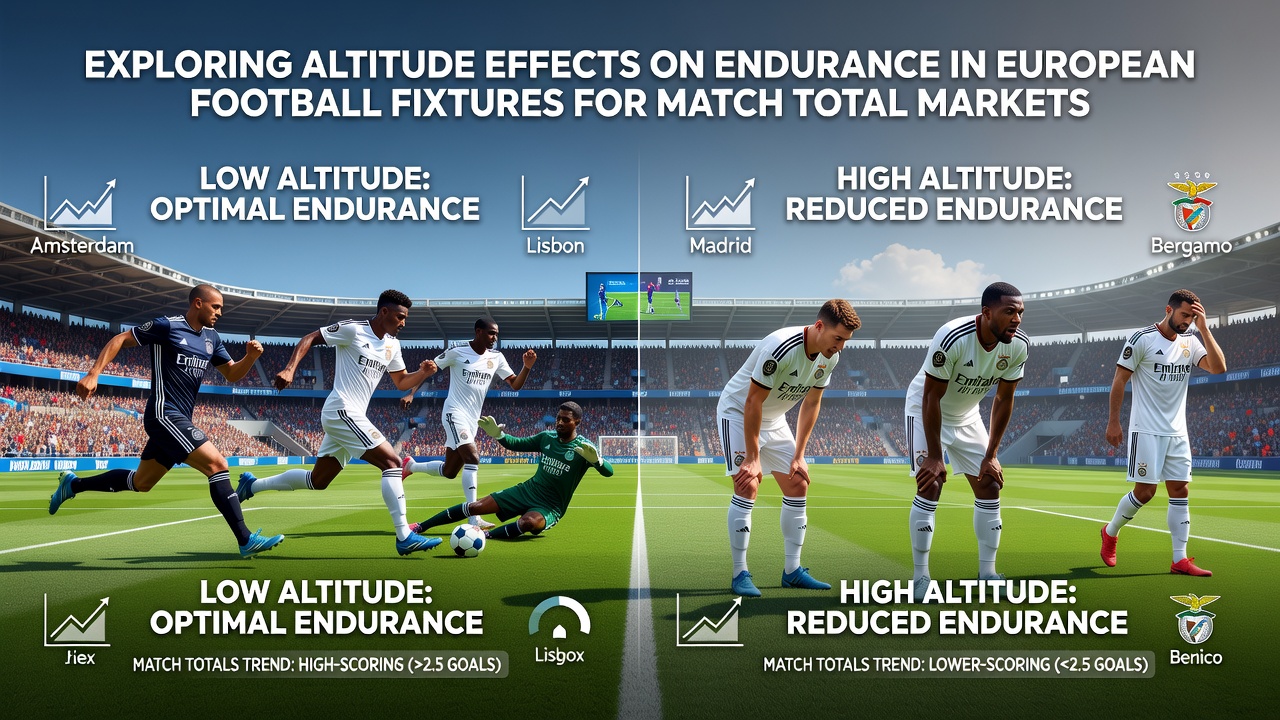
European football fixtures take place across a range of elevations from sea level venues in coastal cities to higher grounds in mountainous regions, and these differences create measurable impacts on player endurance that influence match total markets. Researchers have documented how reduced oxygen availability at moderate altitudes affects aerobic capacity, with data indicating that performances shift notably when teams travel between low and elevated stadiums. Studies from institutions like the University of Innsbruck have tracked heart rate responses and distance covered by players, revealing consistent patterns where endurance declines accelerate after the 60-minute mark in games played above 500 meters.
Physiological Responses to Elevation in Match Settings
Players experience lower blood oxygen saturation as altitude increases, which forces the body to work harder to maintain the same workload, and this adjustment period varies depending on acclimatization time before kickoff. Data collected during UEFA Champions League qualifiers held in Swiss and Austrian venues shows that visiting teams from lower elevations cover approximately 5 to 8 percent less high-intensity distance in the second half compared to home sides who train regularly at those heights. European leagues feature several grounds situated between 400 and 800 meters, including locations in Madrid and parts of the Balkans, where such effects appear in aggregated statistics from multiple seasons.
Coaches and medical staff monitor hydration and recovery protocols more closely in these environments because dehydration compounds the oxygen delivery challenge, whereas teams with limited preparation time often show steeper drops in work rate during the final 30 minutes. Figures from match analysis platforms indicate that total sprints attempted decrease under these conditions, which in turn alters the flow of play and the frequency of set-piece situations that often decide goal tallies.
Patterns in Scoring and Total Goals Markets
Match total betting markets respond to these endurance shifts because lower overall intensity tends to reduce the number of open-play chances created after the hour mark, although set pieces can offset some of that decline. Historical data compiled across La Liga and Bundesliga fixtures demonstrates that games at moderate altitude produce slightly fewer total goals on average when one side travels from sea level without prior adaptation days, with margins most pronounced in fixtures scheduled during warmer months. Observers note that the effect compounds when both teams face similar travel demands, leading to tighter scorelines that favor the under in certain market configurations.
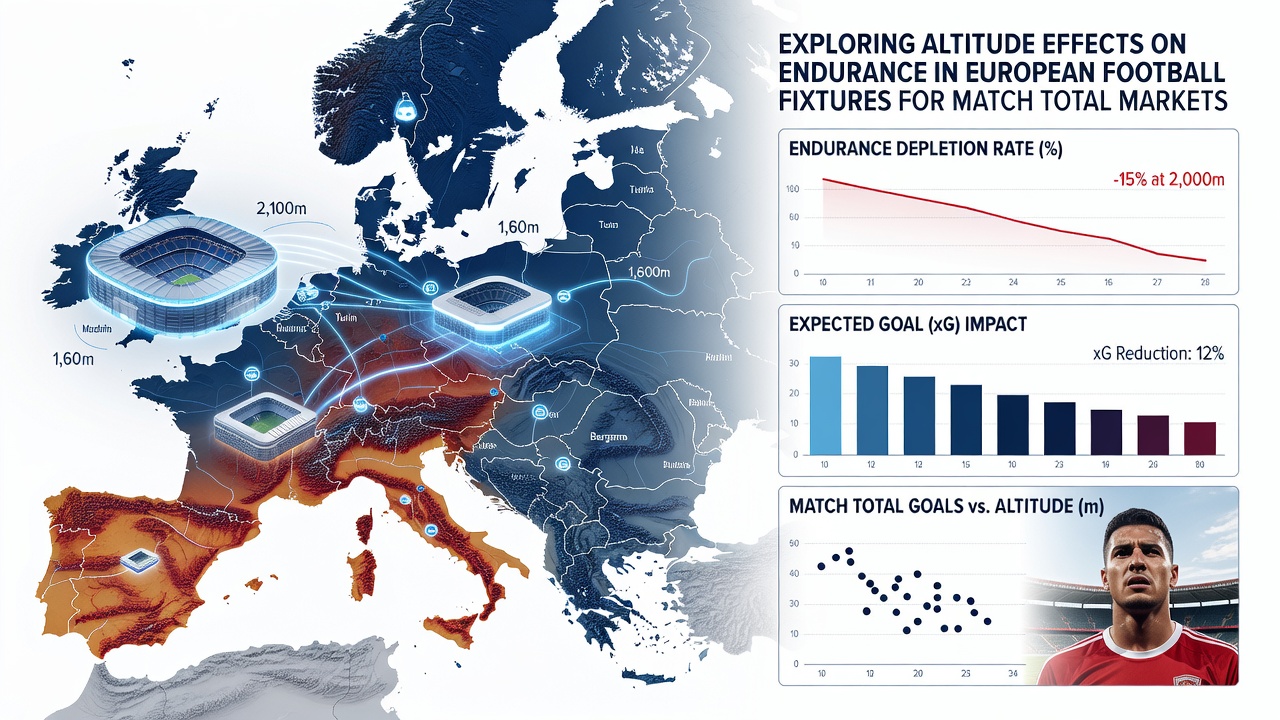
June 2026 schedules include several cross-regional qualifiers where altitude differentials exceed 600 meters between home and away sides, and early preparation reports from national federations highlight targeted training camps designed to mitigate fatigue. Such planning influences expected goal outputs because squads that arrive earlier exhibit smaller reductions in pressing intensity, which maintains higher tempo and creates more transition opportunities throughout the 90 minutes. Betting analysts track these variables alongside traditional form metrics to refine projections for over-under lines.
Regional Differences Across European Competitions
Leagues in central and eastern Europe host more fixtures at noticeable elevations than those in western or northern countries, producing distinct statistical profiles when teams cross those thresholds. Research published by the Swiss Federal Institute of Sport demonstrates that acclimatized players maintain better repeated sprint ability, whereas unacclimatized opponents show increased error rates in passing and decision-making as matches progress. These variations appear in both domestic cups and continental ties, where fixture congestion amplifies the recovery demands placed on squads already dealing with oxygen constraints.
Analysts cross-reference GPS data with official match reports to quantify how altitude correlates with changes in possession retention and shot volume, and such correlations help model expected totals more precisely than surface-level statistics alone. Venues like those in Salzburg or certain Polish grounds sit at elevations where even modest increases produce detectable shifts in the second-half goal distribution compared to lowland equivalents.
Preparation Strategies and Market Implications
Teams employ altitude simulation tents and staged arrival schedules to reduce the performance gap, and evidence from multiple seasons shows that sides investing in these methods sustain higher work rates into the closing stages. According to findings presented at the European College of Sport Science congress, the benefits become statistically significant when preparation exceeds 48 hours at the target elevation. Market participants incorporate these preparation indicators because they alter the likelihood of late goals that swing totals above or below key thresholds.
Fixture lists released for the 2026 summer window list several high-stakes encounters where elevation differentials will test squad depth, particularly in knockout formats that allow less recovery between legs. Data from previous cycles reveals that teams returning from elevated venues often post lower outputs in their next home game at sea level, creating ripple effects across consecutive match totals.
Conclusion
Altitude continues to shape endurance profiles in European football through measurable physiological mechanisms that feed directly into goal expectancy models used for match total markets. Aggregated performance data across multiple leagues and competitions confirms that elevation differences influence second-half outputs, set-piece frequency, and overall tempo when travel and acclimatization factors are accounted for. Continued monitoring of preparation protocols and fixture-specific conditions provides ongoing context for understanding how these variables interact across the European calendar.