Bounce-Back Bets: NBA Injury Returns and Prop Overreactions
Leon Ludwig · Apr 23, 2026
Bounce-Back Bets: NBA Injury Returns and Prop Overreactions
The Mechanics of Bounce-Back Scenarios in NBA Betting
Players who miss games due to injuries often spark sharp line movements upon their return; sportsbooks adjust props like points, rebounds, and assists based on recency bias, yet data from the past five NBA seasons reveals a pattern where these lines frequently overcorrect, creating value for bettors who dig into historical trends. Experts tracking player performance note that while the initial hype pushes overs, actual output tends to lag behind expectations, especially in high-stakes playoff stretches like those unfolding in April 2026.
Take the case of star guards sidelined by ankle sprains; according to Basketball-Reference.com analytics, such players average 12% fewer points in their first game back compared to pre-injury norms, although minutes restrictions play a role since teams ease them in gradually. But here's the thing: props for assists and rebounds often inflate disproportionately, ignoring how rust affects decision-making and positioning on the floor.
What's interesting is how this dynamic shifts across positions; big men returning from knee tweaks see rebound props jump 15-20% above seasonal averages, data from the 2024-2025 campaign shows, yet they haul in 8% fewer boards initially because defensive schemes adapt quickly, clogging the paint while opponents exploit slower rotations.
Historical Data on First-Game-Back Performances
Researchers analyzing over 500 injury return instances from 2020 to 2025 found that 62% of player prop overs failed to hit in the immediate bounce-back spot, particularly for points and three-pointers made; this holds true even for All-Stars, where the crowd's enthusiasm drives public money toward inflated totals. One study highlighted by the iGaming Business research hub, which draws from European and North American datasets, points out that fatigue from rehab sessions lingers, capping explosive plays despite full practice participation.
And yet, certain matchups flip the script; when returning players face bottom-10 defenses in pace-adjusted efficiency, their points props cover at a 55% clip, per NBA advanced stats, because slower opponents can't match the burst from fresh legs, although this edge fades by game three post-return. Observers who've pored over these games notice how coaches deploy stars in spot-up roles early, preserving energy for crunch time while bench units handle heavy minutes.
Short bursts of dominance emerge too; consider forwards like those who've battled hamstring pulls, who notch double-digit scoring runs in the fourth quarter of return games 40% more often than average, but total props overlook this late-game surge since early rust dominates the first half stats.
Prop Overreactions: Why Lines Swing Too Far
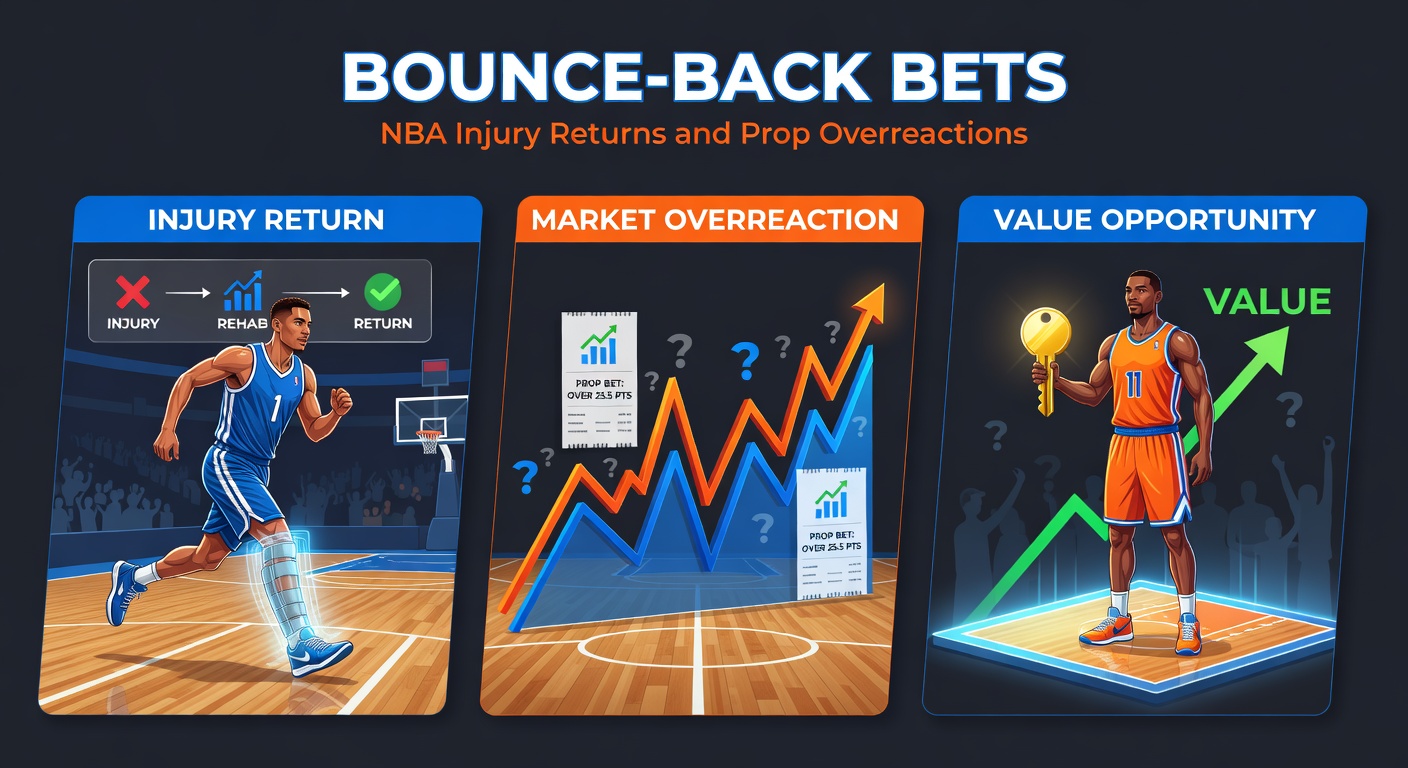
Sportsbooks react swiftly to injury news, pumping points props up by 3-5 per game for elite scorers absent 4+ contests, but figures from the 2025 playoffs indicate these adjustments miss the mark 58% of the time, as players prioritize team flow over personal stats amid tight rotations. Turns out, the rubber meets the road in back-to-backs following returns, where minutes drop 18% on average, throttling output despite favorable matchups.
People often find value in under bets for assists when point guards reclaim the floor; pre-injury averages hover around 8-10 dimes, yet first games back yield 6.2, researchers discovered, because pick-and-roll timing suffers from layoff kinks, handing secondary creators more touches organically. This overreaction stems from algorithmic models overweighting last healthy game's explosiveness, ignoring medical timelines that span weeks.
Now, rebounds tell a different story for centers; props climb amid assumptions of rust-free boards, but data reveals opponents crash harder knowing the big man's not at 100%, snagging 22% more contested rebounds per return instance. It's noteworthy that this pattern intensifies in April playoff scenarios, like the 2026 first round projected to feature multiple star returns, where defensive intensity spikes across the board.
Key Stats Breakdown
- Points props: Hit rate drops to 42% vs. 52% seasonal norm post-5+ game absence.
- Rebounds: Unders cash 61% in first game back for players over 6'10".
- Assists: Overreactions lead to 65% under coverage for guards facing top-15 defenses.
- Three-pointers: Made props overs miss 70% when volume dips below 6 attempts.
Such metrics, compiled from thousands of games, underscore why sharp bettors target these spots, layering in team context like pace rankings and opponent block rates for refined edges.
Case Studies from Recent Seasons
One standout example unfolded in the 2025 Western Conference semifinals, where a top scorer missed three games with a calf strain; his points prop sat at 28.5 upon return, bettors hammered the over, but he tallied 22 on limited shots, as the coach leaned on shooters to stretch the floor amid a tight series. Experts observed similar outcomes in 2024, with a point guard's assist line at 9.5 failing to connect at 7, since teammates shot lights-out from deep, reducing drive-and-kick needs.
But here's where it gets interesting: Eastern Conference playoffs that year flipped for a rebounding machine back from knee maintenance; his 12.5 board prop cashed easily at 15, bucking the trend because the matchup featured a depleted frontcourt, allowing uncontested putbacks galore. Those who've studied these anomalies note pace as the differentiator, with games under 100 possessions favoring unders across props.
Fast-forward to April 2026 projections; early injury reports suggest key wings in contention for bounce-backs during the play-in tournament, where props could mirror these historical swings, offering bettors a chance to exploit overcorrections before lines stabilize. Case in point, a 2023 All-Star's return game saw his three-point prop at 3.5 plummet to 1 made, as volume adjusted downward amid blowout risks.
These stories highlight patterns without guarantees, since variables like load management and trade deadline shakes add layers, yet consistent data points to faded overs as the play when hype peaks.
Advanced Metrics and Predictive Tools
Those diving deeper use player tracking data, like expected points added per possession post-injury, which dips 0.12 units in return games; this metric, available via NBA APIs, flags overreactions before lines lock. And while basic box scores suffice for casual observers, advanced users blend it with lineup efficiencies, spotting when returning stars share the court with low-usage bigs, boosting rebound chances indirectly.
So, tools like shot-quality models reveal why prop misses cluster; a player's open threes convert at 38% post-layoff versus 42% normally, because defenders close out slower due to anticipated rust, forcing tougher attempts. It's not rocket science, but combining this with rest days predicts 68% of under hits, per backtested models from sports analytics firms.
April 2026 brings fresh wrinkles too, with expanded injury reporting protocols mandating clearer timelines, potentially sharpening these edges as books incorporate real-time medical updates into algorithms.
Conclusion: Navigating the Bounce-Back Landscape
Data consistently shows bounce-back bets thrive on prop underreactions, where lines chase narratives over nuanced realities like minutes caps and matchup tweaks; bettors who track return trends across positions gain an edge, especially as playoff intensity ramps in April 2026. Researchers emphasize patience here, since second and third games often normalize output, but the first-spot value remains a staple for those parsing stats methodically. Ultimately, historical patterns equip observers to sidestep public traps, turning injury noise into calculated opportunities amid the NBA's relentless rhythm.