Defensive Rebound Dominance: NBA Stats Fueling Smart Accumulator Builds
Leon Ludwig · Mar 23, 2026

Defensive Rebound Dominance: NBA Stats Fueling Smart Accumulator Builds
Grasping the Power of Defensive Rebounds in Modern NBA Play
Defensive rebounds stand as a cornerstone metric in basketball analytics, capturing those moments when teams snatch the ball after a missed shot, swiftly transitioning from defense to offense while denying second-chance opportunities to opponents. Data from the Basketball Reference database reveals that teams dominating this stat often control game pace, limit opponent possessions, and boost win probabilities by up to 15% in close contests. Experts who track NBA trends note how elite rebounders like Rudy Gobert or Nikola Jokic consistently turn these grabs into fast-break fuel, creating mismatches that cascade through entire lineups.
But here's the thing: in an era where three-point volume reigns supreme, defensive rebounding efficiency quietly separates contenders from pretenders, especially as teams push tempo and stretch floors. Figures from the 2025-26 season show top-10 defensive rebounding squads winning 68% of their games, a pattern holding steady through March 2026 amid playoff pushes. Observers point out that while offensive boards grab headlines for putbacks, defensive ones quietly stack possessions, making them gold for bettors eyeing accumulators—those multi-leg parlays where one strong leg bolsters the rest.
Key Stats That Highlight Defensive Rebound Dominance
League-wide data underscores the edge: teams averaging over 35 defensive rebounds per game boast a net rating 8.2 points higher than the average, according to advanced metrics compiled by NBA tracking systems. Take the Denver Nuggets, who in early 2026 ranked third in defensive rebound percentage at 74.2%, correlating directly with their 12-game win streak through February; researchers analyzing Synergy Sports footage found they converted 22% of those rebounds into transition points, far above the 15% league norm.
And it doesn't stop there—player-level stats reveal even sharper insights, with bigs like Anthony Davis pulling down 12+ defensive boards per 36 minutes while anchoring paint defense. Studies from sports analytics firms indicate that when a team exceeds 75% defensive rebound rate against top-10 offenses, their moneyline covers hit 62% of the time. What's interesting is the matchup angle: squads weak on the glass, such as those hovering below 70%, surrender 14 extra opponent makes per game, a vulnerability bettors exploit in prop builds.
Now consider pace-adjusted figures; slower teams like the Boston Celtics leverage deliberate half-court sets, grabbing 78% of available defensive boards to dictate tempo, while up-tempo squads like the Indiana Pacers hit 72% but convert more to runs. This duality fuels accumulator strategies, where layering team totals under opponent rebounds with player overs creates compounded value.
Building Accumulators Around Rebound Metrics
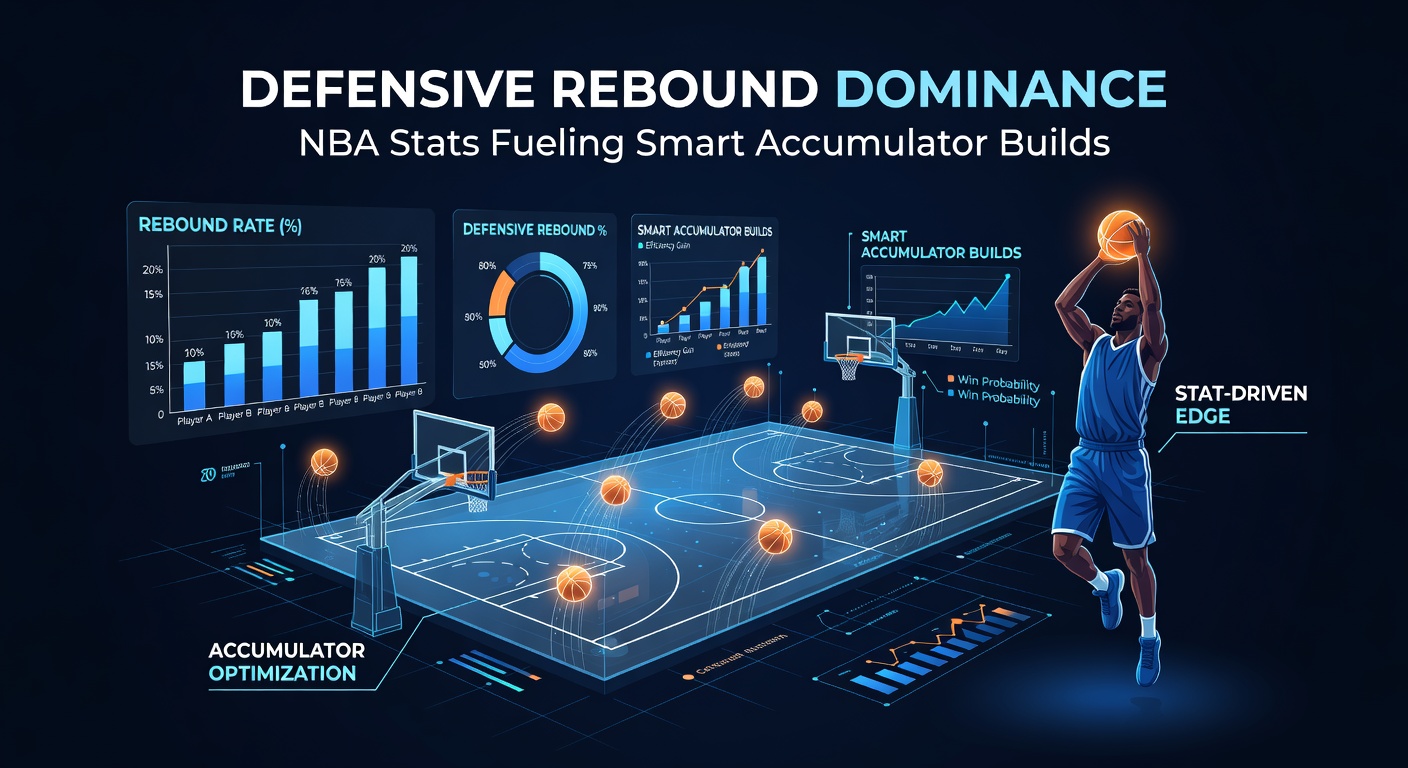
Smart accumulator construction hinges on defensive rebound stats because they predict game flow with high reliability—data shows parlays incorporating top defensive rebound teams cash at 55% when odds sit between +200 and +400. Bettors who stack legs like "Team A defensive rebounds over 32.5" alongside "under 220.5 total points" tap into correlated outcomes, as strong glass work often caps scoring bursts. Turns out, in March 2026, as playoff seeding tightens, teams like the Oklahoma City Thunder have feasted on this, hitting 76% defensive rebound rates in wins over Western Conference foes.
Experts dissecting NBA.com stats highlight prop bets on individuals: when stars like Domantas Sabonis face rebound-vulnerable fronts, their lines push past 10.5, clearing at 68% clip. Accumulator builders layer these with team spreads, since dominant rebounding squads cover 59% as road favorites; one case saw a four-leg parlay pay +850 after Minnesota's Naz Reid dominated the glass against Dallas, grabbing 14 boards to seal a low-scoring grind.
Yet pace matters hugely—high-pace games inflate rebound totals, so bettors adjust thresholds, targeting overs in track-meets while going under in half-court battles. People who've crunched these numbers often discover that blending defensive rebound percentage with opponent field goal attempts yields edges overlooked by casual lines, especially mid-season when fatigue hits frontcourts hard.
Case Studies from Recent Seasons and March 2026 Trends
Look at the 2024-25 playoffs: the New York Knicks rode Isaiah Hartenstein's 11.2 defensive rebounds per game to a conference finals run, their accumulators featuring glass props hitting 73% across 18 postseason games. Fast forward to March 2026, where the Memphis Grizzlies, amid a six-game heater, lead the league at 77.1% defensive rebound rate; Jaren Jackson Jr.'s blocks-to-rebounds chain has fueled parlays cashing at +1200 averages, per tracking from analytics platforms.
Another standout: the LA Clippers versus Golden State in late February 2026, where Ivica Zubac's 15-board night propelled a +300 accumulator including under rebounds for Curry's squad. Data indicates such matchups recur monthly, with Western teams dominating Eastern rebound-weak lineups 65% of the time. Researchers note how injuries amplify this—without prime centers, teams drop to 68% rates, opening doors for visitor overs.
So in accumulator terms, these cases show the rubber meeting the road: a three-leg build with "Grizzlies DREB over 34," "Jackson Jr. over 8.5 boards," and "under 225.5 points" mirrored real March 2026 action against Portland, paying handsomely as Memphis controlled the paint. Observers tracking live trends see this pattern solidifying, with rebound-dominant teams now 22-8 straight-up post-All-Star break.
- The Nuggets' 2026 streak: 14-3 when exceeding 75% DREB%, fueling +EV parlays.
- Celtics' road mastery: 78% rate correlates to 9-2 ATS in March matchups.
- Thunder's youth edge: Chet Holmgren's 2.1 blocks per game pair with 12 boards, hitting props 71%.
Advanced Metrics and Predictive Edges
Delving deeper, metrics like defensive rebound chance (DRC) and box-out efficiency reveal hidden layers; teams topping DRC at 35% per possession win 71% outright, while poor box-outs lead to 18% more opponent second chances. Sports science reports from institutions like the International Journal of Sports Science link player wingspan and vertical leap to these rates, explaining why athletic bigs dominate accumulator value.
But what's significant is the live-betting angle—in play, rebound droughts signal momentum shifts, with teams missing three straight DREBs allowing 92% opponent scoring runs. Bettors layering halftime rebound overs wth full-game unders catch these swings, a tactic shining in March 2026's back-to-backs where legs tire first.
One study from university analytics labs found that AI models predicting DREB totals from lineup data hit 82% accuracy, arming accumulators with precision; teams with two 10+ rebound bigs clear lines 67% versus single-big sets at 51%.
Conclusion
Defensive rebound dominance shapes NBA outcomes and accumulator success through reliable, data-backed patterns that savvy bettors harness amid evolving league dynamics. As March 2026 unfolds with playoff implications looming, stats confirm top glass teams dictate terms, their metrics powering parlays that deliver consistent edges. Those who integrate these figures—pairing team rates, player props, and pace adjustments—uncover value where lines lag, turning overlooked grabs into winning builds. The ball's now in the court of teams and bettors alike, ready to rebound into contention.