European Football's Scheduling Squeeze and Its Influence on Goal Markets
Paul Schmitz · Jul 14, 2026
European Football's Scheduling Squeeze and Its Influence on Goal Markets
European football calendars pack multiple domestic leagues, cup competitions, and continental tournaments into single seasons, creating fixture congestion that researchers track through performance data across major clubs. Teams often play three matches in seven days during peak periods, and this pattern repeats from August through May with additional midweek fixtures in Champions League or Europa League campaigns.
Fixture Density Patterns Across Top Leagues
Data from the 2024/25 season showed Premier League sides averaging 52 to 58 matches when including all competitions, while Bundesliga clubs reached similar totals because of their domestic cup and European involvement. Observers note that La Liga and Serie A schedules follow comparable structures, although travel distances vary and affect recovery windows differently. The 2026 calendar introduces further pressure because several leagues adjust dates around international windows ahead of summer qualifiers.
UEFA competition formats add extra rounds in the new league-phase system, extending group-stage commitments into late January for some sides. Those who've studied match logs find that clubs reaching quarterfinals or semifinals accumulate the highest totals, often exceeding 60 games by season's end.
Player Workload and Recovery Metrics
Sports science reports from European institutes document elevated muscle-fatigue markers after repeated high-intensity matches with fewer than four rest days between fixtures. GPS tracking data collected by clubs reveals reduced high-speed running distances in the third consecutive game within a short window, and these physical declines correlate with changes in tactical execution on the pitch.
Analysts at academic centers in Germany and the Netherlands have examined heart-rate variability and sleep patterns among elite players, finding measurable drops in recovery quality during congestion spikes. Such physiological shifts influence decision-making speed and positioning, which in turn affects chance creation and conversion rates observed in match statistics.
Impact on Scoring and Goal Markets
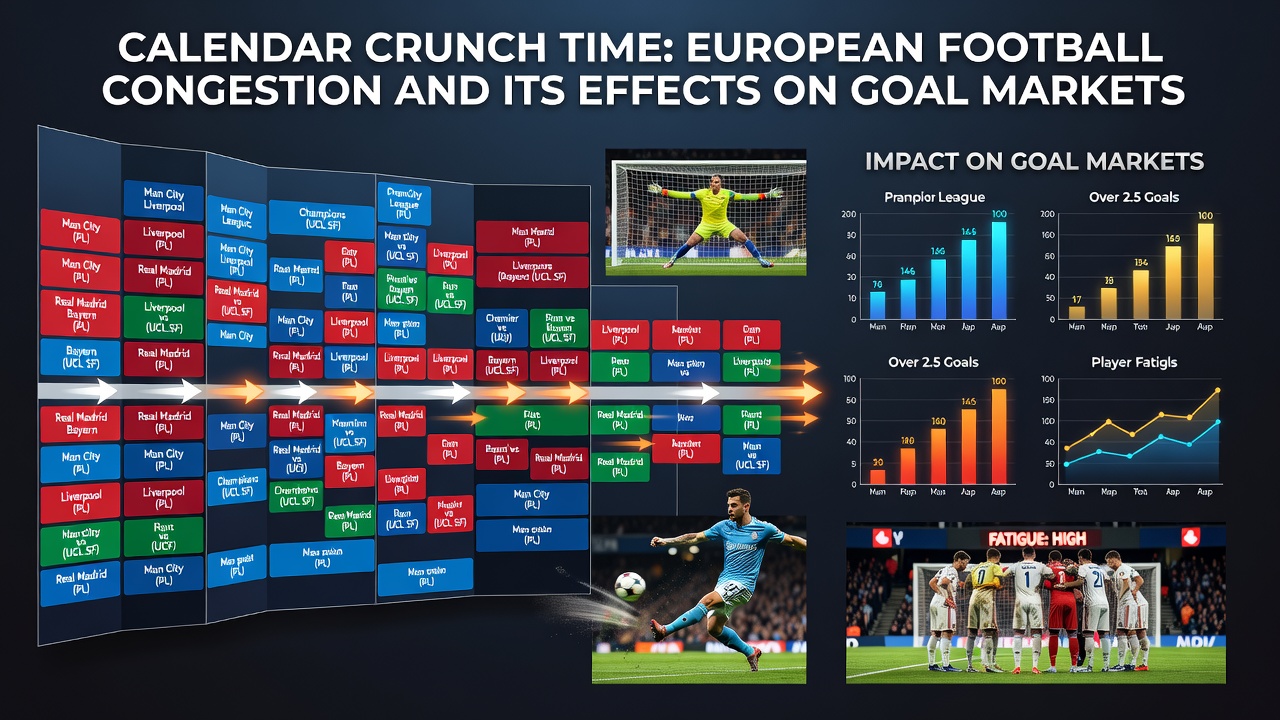
Statistical reviews of over 3,000 matches from the past five seasons indicate that teams with three fixtures in eight days produce lower average goal outputs compared with sides enjoying standard rest intervals. The effect appears most pronounced in away games where travel compounds fatigue, leading to fewer shots on target and reduced expected-goal values according to models compiled by performance analytics groups.
Goal totals in domestic leagues dip during December and March clusters when European commitments overlap with league rounds. Figures from Opta-derived datasets show a measurable shift toward under 2.5 goals in these windows, while clean-sheet percentages rise slightly for defensively organized sides. Yet certain high-pressing teams maintain or even increase goal tallies because squad rotation policies mitigate individual workload spikes.
Betting Market Adjustments and Data Trends
Bookmaker odds compilers incorporate fixture congestion variables into goal-line pricing, and historical records demonstrate that markets tighten when multiple top clubs face packed schedules simultaneously. Research published by sports analytics platforms reveals that over-performance in goal markets occurs less frequently under fatigue conditions, prompting adjustments in live odds during congested periods.
One study released by a Canadian university sports lab examined goal timing across congested versus non-congested fixtures and found later first goals and fewer second-half strikes when recovery time fell below 72 hours. Those patterns hold across multiple leagues, although variance increases in cup ties where motivation factors can offset physical limitations.
July 2026 Preparations and Schedule Outlook
Clubs begin pre-season planning in July 2026 with awareness that expanded international calendars will compress domestic recovery periods further. UEFA and national associations release provisional fixture lists that attempt to spread midweek fixtures, yet overlapping qualification matches for continental and global tournaments still create pinch points. Pre-season testing data from that month often highlights early workload management strategies that carry into the competitive campaign.
Conclusion
Fixture congestion in European football produces measurable effects on goal production that statistical models capture across multiple seasons and competitions. Clubs respond through rotation, sports-science monitoring, and tactical adaptations, while betting markets reflect these patterns through adjusted pricing. Continued collection of workload and performance data will clarify how future calendar adjustments influence scoring trends in the seasons ahead.