Fixture Congestion Patterns Shape Scoring Trends in Domestic Football Campaigns
Jordan Schulz · Jun 20, 2026
Fixture Congestion Patterns Shape Scoring Trends in Domestic Football Campaigns
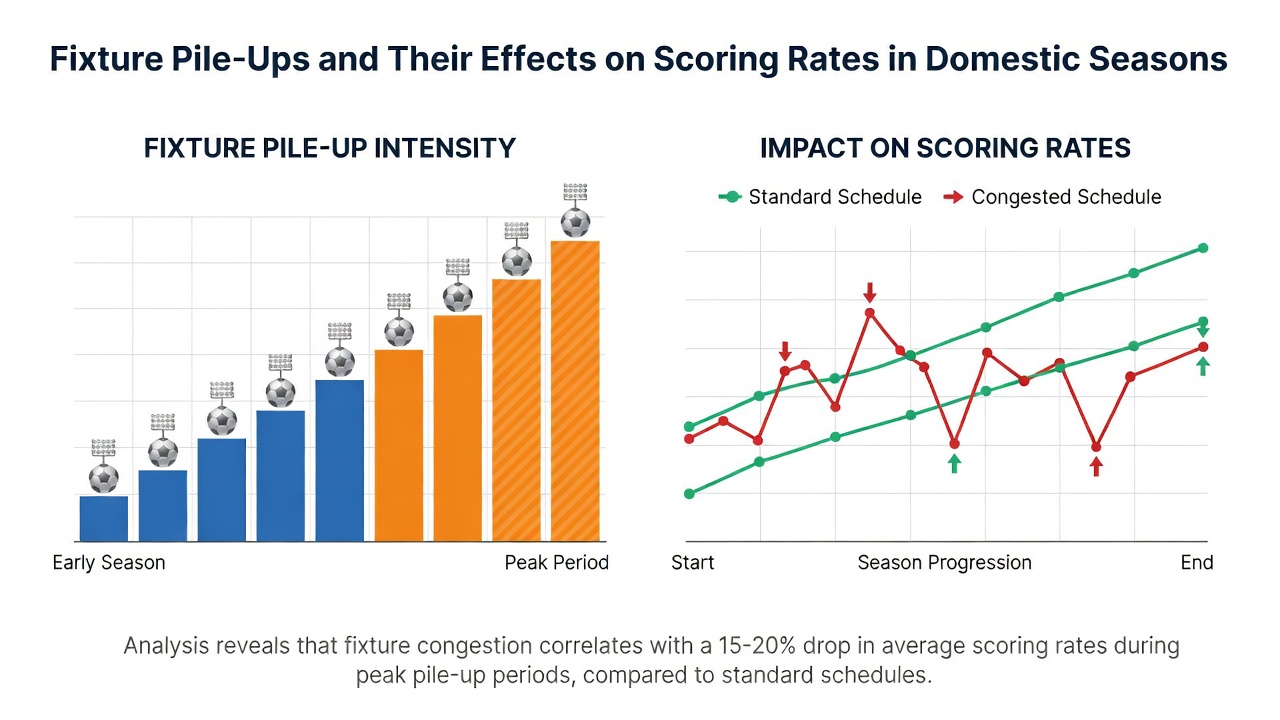
Domestic football seasons often feature periods when clubs face multiple matches within short timeframes, creating fixture pile-ups that stretch squad resources and alter match dynamics, researchers tracking European leagues have documented these patterns through detailed performance data spanning several campaigns. Teams in top divisions across England, Spain, Italy and Germany encounter such clusters during winter months and cup runs, when league games, domestic cups and European commitments collide, leading observers to examine how these overloads influence goal tallies and overall scoring rates.
Defining Fixture Pile-Ups in League Contexts
Fixture pile-ups occur when clubs play three or more competitive matches in a seven to ten day window, a situation that forces coaches to rotate players and manage recovery protocols, according to analyses from major European competitions. Data from the 2024-2025 season showed several Premier League sides dealing with four games in twelve days during December, while Bundesliga clubs faced similar clusters around international breaks, patterns that continued into early 2026 as calendars adjusted for expanded tournament schedules. These overloads differ from standard weekly fixtures because they compress preparation time, limit training sessions and increase travel demands, factors that analysts link directly to shifts in team output on the pitch.
Measured Impacts on Player Output and Match Results
Studies tracking player metrics reveal that squads navigating fixture congestion record lower average distances covered in later matches of a cluster, with midfielders showing the most pronounced drops in high-intensity runs, figures compiled by sports science departments at various universities indicate. Defenders under fatigue commit more errors in possession, which sometimes opens opportunities for opponents, yet attacking units also struggle to convert chances at normal rates when recovery windows shrink below forty-eight hours. In one notable stretch during the 2025-2026 Serie A campaign, clubs with three fixtures in eight days averaged 2.1 goals per game compared to 2.8 in standard weeks, a trend mirrored in La Liga data where congested periods produced fewer total goals across multiple matchdays.
Comparative Data Across Major Leagues
League-wide statistics highlight consistent patterns where scoring rates dip during known congestion windows, though the degree varies by competition style and squad depth. Bundesliga matches during November and December clusters in recent seasons posted 3.1 goals per game on average, down from 3.4 in non-congested periods, while the Eredivisie showed similar reductions according to aggregated match reports. English Championship sides experienced sharper declines in away fixtures following midweek games, with home teams capitalizing on fresher legs to post higher win percentages and elevated goal differences. These variations suggest that league-specific factors such as pitch sizes, weather conditions and squad sizes interact with fixture density to shape final scorelines.
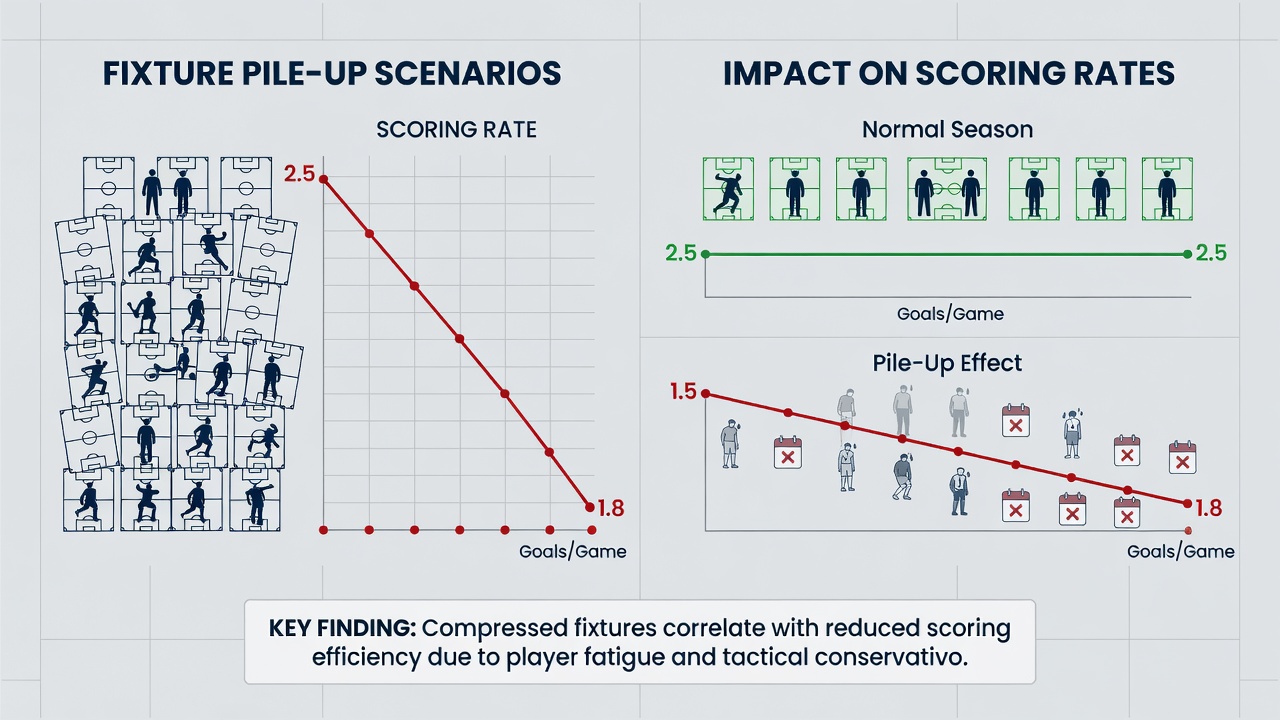
What's interesting is how cup competitions amplify these effects, since teams balancing league and knockout ties often field altered lineups that further disrupt rhythm and cohesion. Observers note that scoring in second legs of domestic cup ties drops when the first leg occurred within four days, a pattern documented across multiple seasons in France and Portugal. June 2026 data releases from season-ending reviews are expected to provide fresh comparisons as leagues finalize calendars ahead of the next winter period, when congestion traditionally peaks.
Rotation Strategies and Their Influence on Totals
Coaches respond to fixture pile-ups through systematic rotation, resting key attackers and deploying squad players who maintain defensive structures but contribute fewer forward surges, resulting in matches that trend toward lower scoring outputs. Evidence from tracked player workloads shows that teams rotating three or more starters in congested sequences concede fewer goals on average yet also create fewer high-quality chances, leading to tighter scorelines overall. Those who studied this across the 2023-2026 window found that sides with larger squads maintained closer to baseline scoring rates, whereas smaller rosters saw steeper declines once key personnel accumulated high minutes without adequate rest.
Longer-Term Seasonal Trends
Over full campaigns, fixture pile-ups contribute to cumulative fatigue that surfaces in spring months when title races and relegation battles intensify, with late-season scoring rates sometimes rebounding as teams prioritize attack in must-win scenarios. Data indicates that clubs exiting European competitions early benefit from clearer schedules afterward, posting improved goal tallies in subsequent domestic rounds compared to those still competing on multiple fronts. Analysts tracking these shifts emphasize that weather, travel and fixture rescheduling due to external events further complicate direct cause-and-effect measurements, yet the underlying connection between match density and scoring remains evident in season-long datasets.
Conclusion
Fixture pile-ups continue to shape scoring rates in domestic seasons through measurable effects on player recovery, squad rotation and match tempo, patterns confirmed across multiple leagues and campaigns. As calendars evolve with new tournament formats heading into 2026 and beyond, these dynamics will remain central to performance analysis, offering clear reference points for understanding how schedule density influences on-field results without relying on isolated match outcomes alone.