Modern Conditioning Techniques Unlock Fresh Wagering Angles in Thoroughbred Events
Zara Sullivan · Aug 15, 2026

Modern Conditioning Techniques Unlock Fresh Wagering Angles in Thoroughbred Events
Training methods for racehorses have shifted toward data-driven protocols that track recovery intervals, muscle development, and cardiovascular thresholds with greater precision than previous decades allowed. Researchers at veterinary colleges have documented how these changes create measurable differences in performance consistency across flat and jump races alike.
Data Integration in Daily Workouts
Trainers now combine wearable sensors with blood lactate testing to adjust gallop distances and recovery periods on a session-by-session basis, and this granular information reaches betting markets through form analysts who publish adjusted speed ratings. Studies from the University of Sydney's equine research unit show that horses following individualized high-intensity interval programs exhibit 12 to 15 percent fewer late-race fade patterns compared with those on traditional volume-based schedules.
Observers note that yards adopting these methods often post improved strike rates in the final three furlongs, a statistic that appears in post-race sectional data released by racing authorities. Those who monitor such trends can cross-reference published workout times against historical benchmarks for specific tracks and distances.
Recovery Monitoring and Seasonal Patterns
August 2026 brings heightened attention to northern hemisphere yards that have incorporated cryotherapy chambers and underwater treadmills into their standard routines, because official race-day veterinary reports now include basic recovery markers alongside traditional going descriptions. Industry reports indicate that horses returning from enforced rest periods under these protocols demonstrate steadier early-season form than in prior years when rest alone dictated readiness.
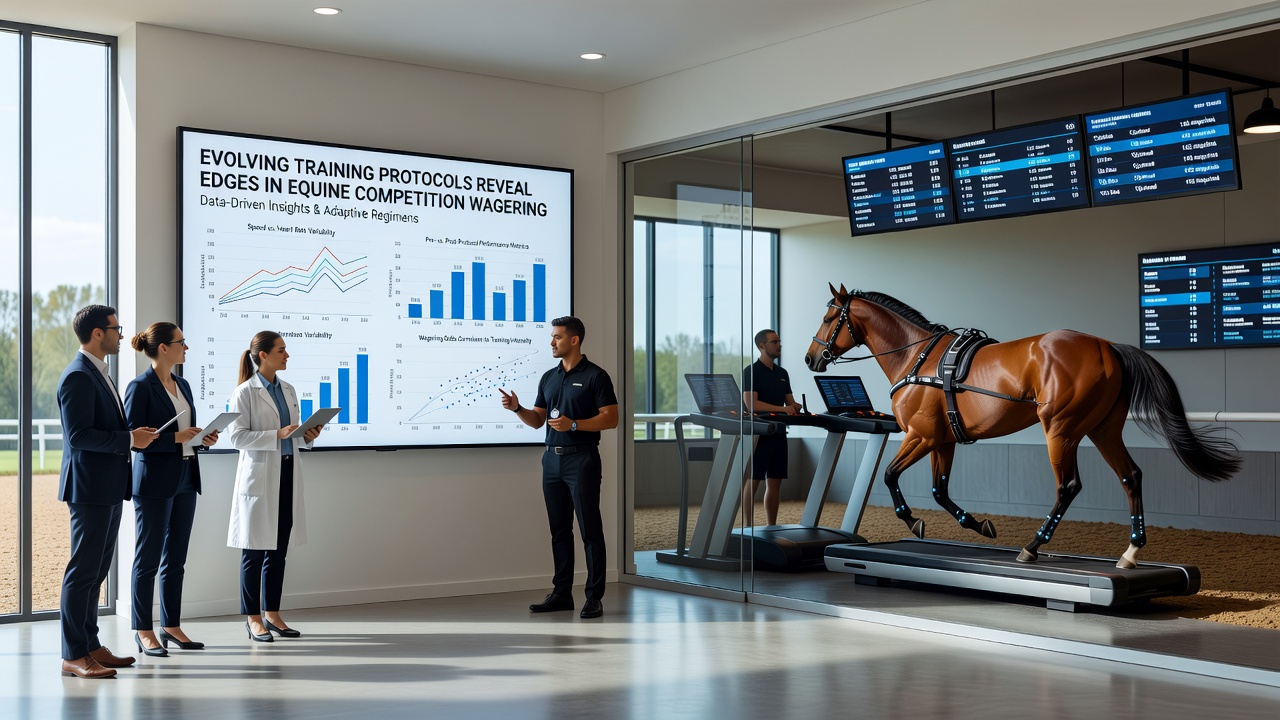
Form compilers have started to flag entries whose recent training logs include documented high-recovery scores, and these flags correlate with reduced instances of non-completion in staying races. Data from the Canadian Thoroughbred Horse Society reveals that such horses maintain win percentages above their career averages when competing within four weeks of a monitored recovery block.
Comparative Yard Performance Metrics
Regional differences emerge when comparing European and North American approaches to interval training. Yards in Ireland emphasize hill work combined with heart-rate variability tracking, whereas many American operations focus on synthetic surface repetitions that simulate race-day stress loads. A report issued by the American Association of Equine Practitioners highlights how these divergent methods produce distinct sectional time signatures that sophisticated models can isolate for specific race conditions.
Handicappers who integrate yard-specific training profiles into their assessments often locate discrepancies between official ratings and actual recent outputs. One analysis of 2025 graded stakes results demonstrated that horses from facilities publishing detailed biometric summaries outperformed market expectations by an average margin of 1.8 lengths in route events.
Implications for Market Pricing
Betting exchanges adjust odds more rapidly when training data becomes public through official channels, yet delays still occur between the release of recovery statistics and full incorporation into starting prices. Those monitoring primary sources such as Racing Australia publications can identify instances where early market layers have not yet reflected updated conditioning information.
Cross-border comparisons add another layer, because regulatory bodies in different jurisdictions release workout summaries on varying schedules. Observers who track both Australian and North American reports simultaneously sometimes locate timing gaps that affect ante-post markets for international events.
Conclusion
Evolving training protocols continue to supply fresh datasets that influence both performance forecasting and market efficiency in equine wagering. Continued publication of biometric and recovery metrics by official bodies supplies handicappers with additional variables to incorporate into existing models without altering core methodology.