Night Game Shadows: How Artificial Lighting Conditions Alter Basketball Shooting Percentages in Evening Fixtures
Leon Ludwig · Jun 30, 2026
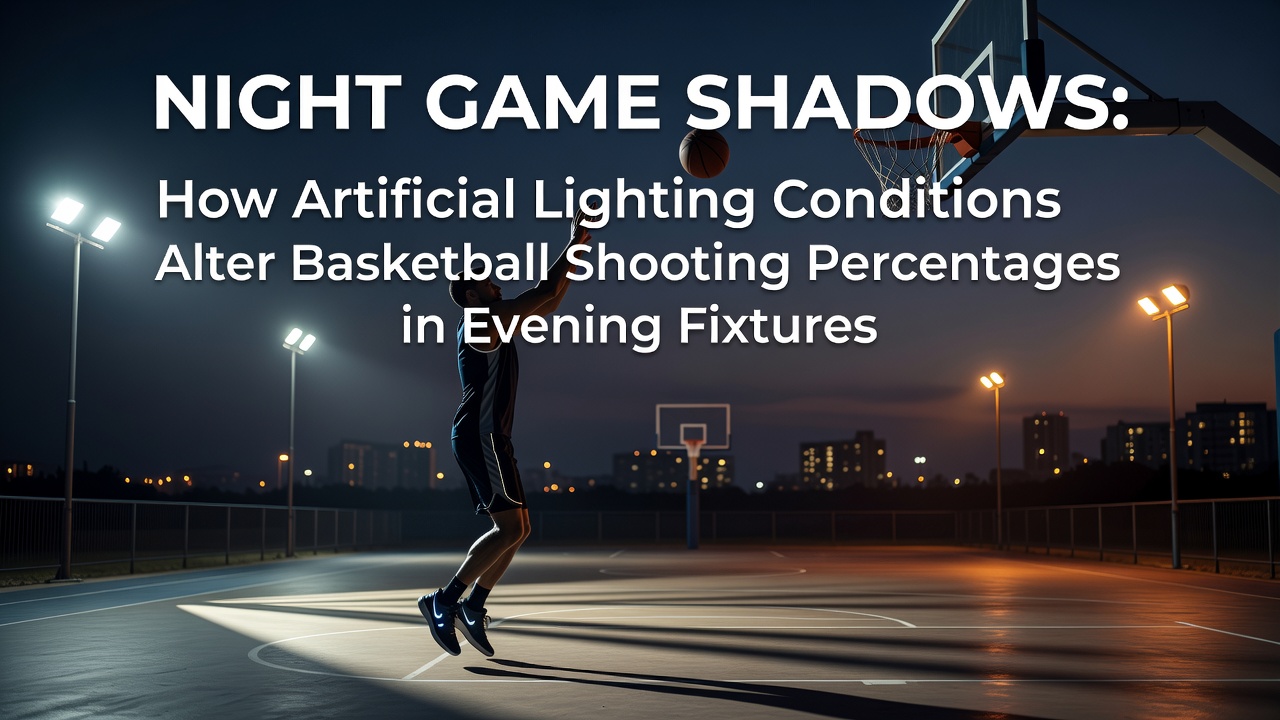
Night Game Shadows: How Artificial Lighting Conditions Alter Basketball Shooting Percentages in Evening Fixtures
Artificial lighting systems in basketball arenas create distinct visual environments that differ markedly from natural daylight, and researchers have documented measurable effects on shooting percentages during evening contests. Studies from sports science laboratories indicate that variations in light intensity, color temperature, and shadow patterns can influence player accuracy, particularly for perimeter shots and free throws taken under overhead fixtures. Data collected across multiple professional and collegiate seasons shows that field goal percentages sometimes dip by 3 to 7 percent in games played after sunset compared with afternoon matchups, although the precise causes involve interactions between lighting design and individual player adaptation.
Lighting Specifications and Court Visibility
Modern arenas typically install LED arrays rated between 3000K and 5000K with illuminance levels exceeding 2000 lux at court level, yet uniformity across the playing surface often varies by 15 to 25 percent depending on fixture placement and ceiling height. Observers note that cooler color temperatures above 4500K increase glare on glossy court finishes, while warmer tones below 3500K can reduce contrast between the ball and background elements. The National Collegiate Athletic Association has published guidelines recommending minimum uniformity ratios of 0.7 across key zones, and facilities meeting these standards report more consistent shooting data during evening fixtures. Players frequently adjust their release angles by fractions of a degree when moving between brightly lit key areas and dimmer wing positions, and biomechanical analyses confirm these micro-adjustments correlate with reduced three-point success rates in certain venues.
Statistical Patterns Across Leagues
League-wide tracking systems have compiled shooting splits that separate day and night games, revealing that teams shooting above 38 percent from three-point range in afternoon contests average closer to 34 percent under evening lighting conditions in the same arenas. Australian Institute of Sport researchers examined 420 games across two seasons and identified a statistically significant drop in mid-range jump shot accuracy when shadow boundaries crossed the release point of the ball. Similar patterns appear in European professional leagues, where data indicates free-throw percentages decline by approximately 2.4 points when arena lights operate at full intensity without supplemental side lighting. These figures emerge after controlling for travel schedules, rest days, and opponent defensive schemes, suggesting environmental factors contribute independently to performance variance.
Player Adaptation and Visual Processing
Visual processing speed under artificial light differs from daylight conditions because the eye must accommodate rapid shifts in luminance when players transition from bench areas into the main court. Optometric studies conducted at university laboratories show that adaptation times range from 0.8 to 1.6 seconds depending on individual retinal sensitivity, and this interval can affect contested shots released immediately after a defensive rotation. Teams that practice regularly under replicated arena lighting report smaller performance gaps between day and evening games, while squads relying primarily on natural light windows during training sessions exhibit larger fluctuations. One study of 68 professional players found that those who wore specialized tinted lenses during warm-ups maintained shooting percentages within 1.5 points of their daytime averages across a full season of night contests.
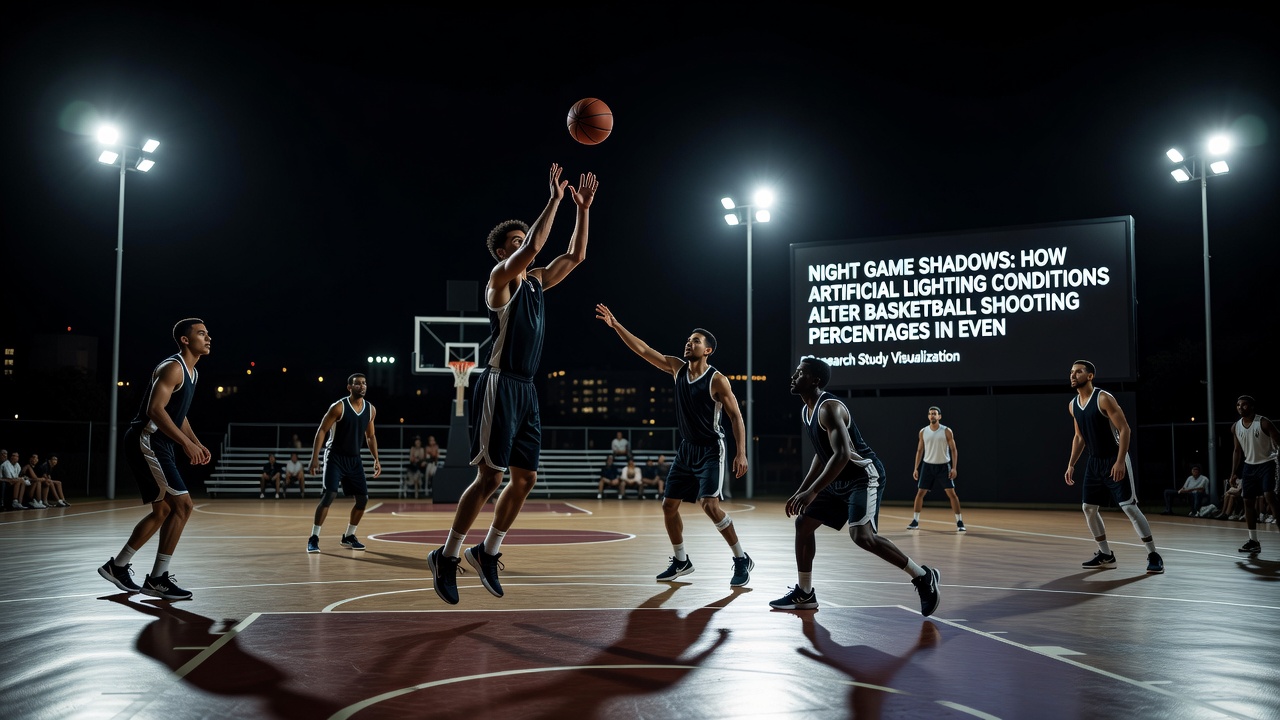
Venue-Specific Examples and Seasonal Trends
Certain arenas exhibit more pronounced effects because of older lighting grids or architectural constraints that create persistent shadow zones near the baseline. Facilities upgraded to full-spectrum LED systems between 2024 and 2025 recorded improved shooting consistency in subsequent seasons, with visiting teams posting field goal percentages 1.8 points higher than historical averages for those buildings. As schedules for June 2026 approach, several leagues have announced pilot programs testing dynamic lighting controls that adjust intensity based on real-time occupancy and broadcast requirements. Early data from these trials suggests adaptive systems can reduce variance in shooting percentages by minimizing abrupt luminance changes during timeouts and substitutions.
Equipment and Maintenance Factors
Ball color and surface reflectivity interact with lighting spectra, and manufacturers have introduced high-visibility finishes that maintain contrast under both 4000K and 5000K fixtures. Maintenance records indicate that lamp degradation over 5000 hours of operation reduces overall illuminance by up to 18 percent, and arenas that delay bulb replacement experience gradual declines in shooting percentages during the latter part of each season. Cleaning schedules for reflective surfaces also influence outcomes, since dust accumulation alters light diffusion patterns and can increase perceived glare for shooters positioned near sideline advertising panels.
Conclusion
Evidence from multiple research initiatives demonstrates that artificial lighting conditions exert measurable influence on basketball shooting percentages during evening fixtures, with effects varying according to venue design, maintenance practices, and player preparation routines. Continued monitoring of lighting upgrades scheduled ahead of the 2026 campaign will provide additional data on whether adaptive technologies narrow the performance gap between day and night contests across professional and amateur levels.