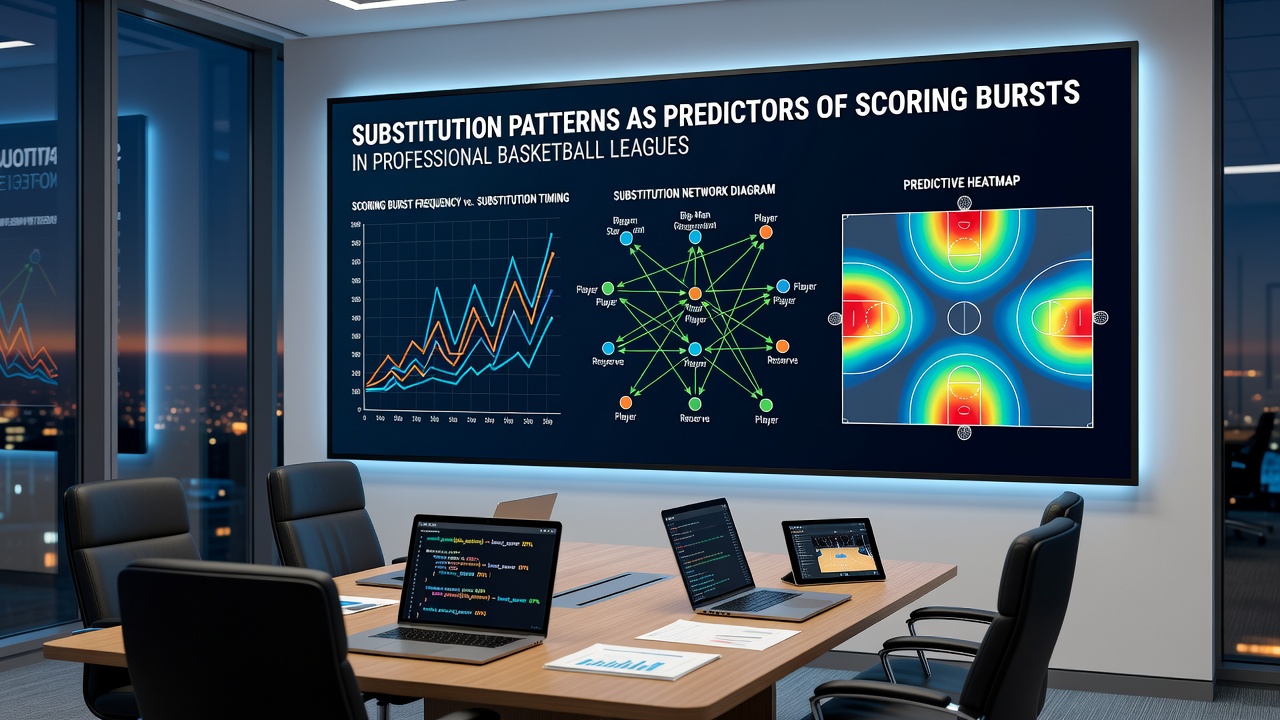
Substitution Patterns as Predictors of Scoring Bursts in Professional Basketball Leagues
Leon Ludwig · Jun 11, 2026
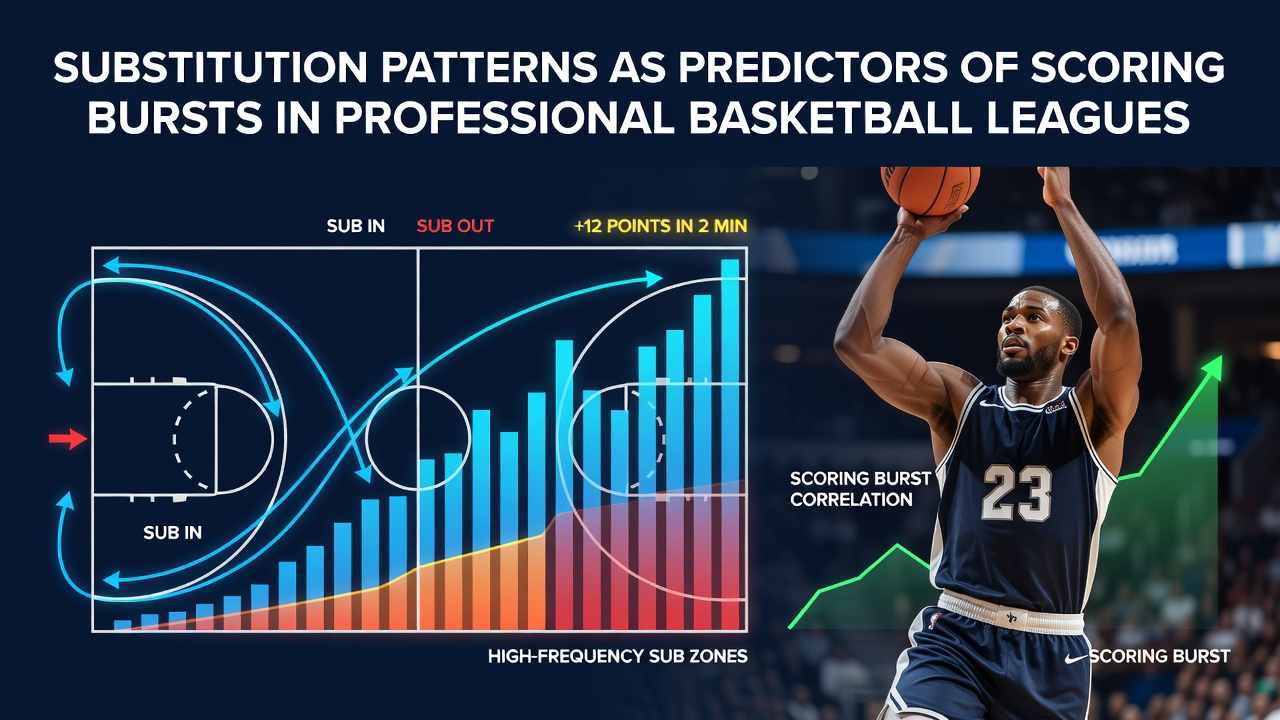
Substitution Patterns as Predictors of Scoring Bursts in Professional Basketball Leagues
Professional basketball leagues generate extensive datasets on player rotations, and analysts track how substitution patterns correlate with scoring runs across the NBA, EuroLeague, and other circuits. Teams rotate personnel every few minutes to manage fatigue, exploit matchups, and adjust defensive schemes, which creates measurable shifts in offensive efficiency. Data from recent seasons shows that clustered substitutions often precede scoring bursts when fresh units enter together and establish quick rhythm through transition plays or perimeter shooting.Rotation Timing and Its Measurable Effects
Coaches in the NBA typically call timeouts or make wholesale changes near the six-minute mark of quarters, and tracking systems record the subsequent points scored within the next two minutes. Studies from league tracking providers indicate that units with multiple perimeter players substituted simultaneously produce higher three-point attempt rates in the immediate window that follows. Those patterns emerge because new shooters stretch defenses before opposing coaches can adjust, and the effect appears stronger when the incoming group includes at least one player who averages above 38 percent from beyond the arc over the prior month. European leagues follow similar rhythms yet operate under different foul and timeout rules, so substitution clusters occur more frequently in the middle of quarters. Figures from EuroLeague tracking reveal that teams introducing two new frontcourt players together generate elevated second-chance points in the following possessions, largely because fresh bigs secure rebounds at higher rates before fatigue sets in again.Statistical Models Used Across Leagues
Advanced models combine play-by-play logs with substitution timestamps to calculate expected points added during the two-minute windows after each change. Researchers apply regression techniques that control for opponent strength, score differential, and time remaining, and the resulting coefficients highlight specific rotation signatures that precede above-average scoring stretches. One recurring signal appears when a team rests its primary ball-handler for under four minutes and then reinserts that player alongside two other rested teammates, producing measurable increases in assist-to-turnover ratios during the next stretch of play. Additional variables include the defensive rating of the outgoing unit and the pace at which the incoming players have performed in prior games. When those metrics align, the probability of a five-point or greater run within 90 seconds rises measurably according to season-long aggregates. Observers note that these signals hold across both regular-season and postseason contests, although the magnitude varies with rest advantage and travel schedules.