Tennis Injury Windows: How Pre-Match Timing Shifts Betting Markets Ahead of Widespread Awareness
Leon Ludwig · Aug 13, 2026
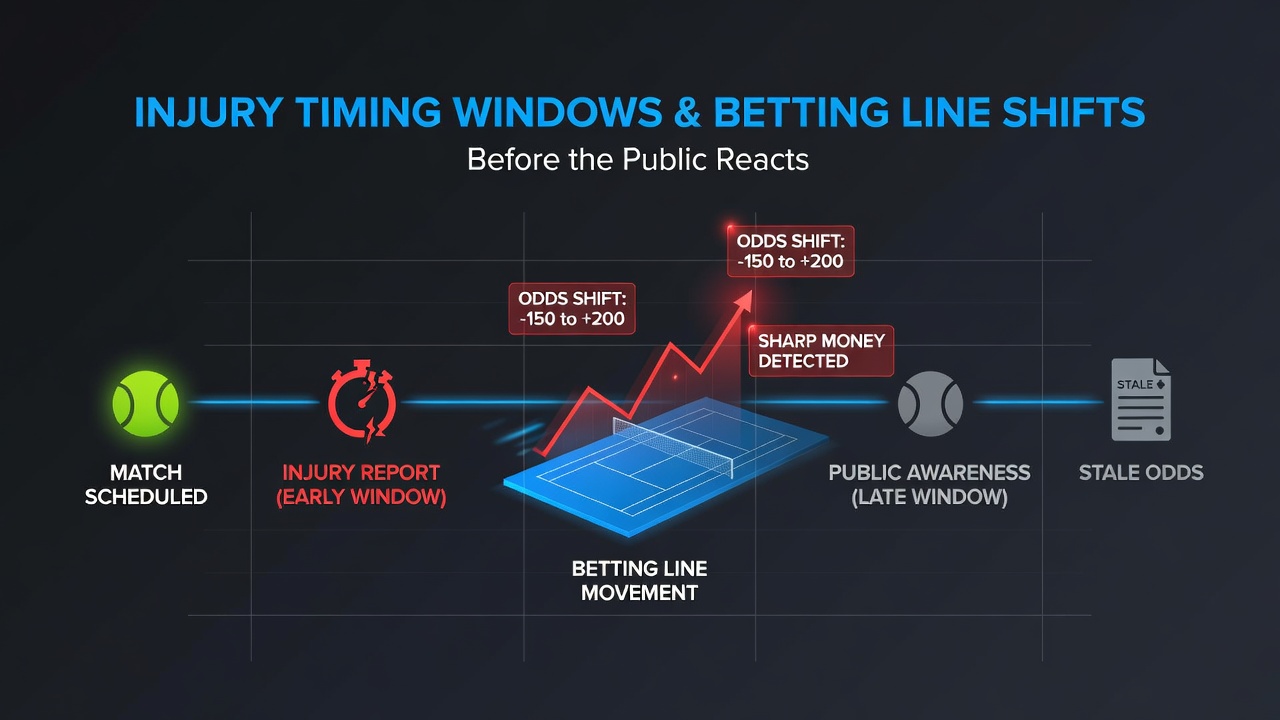
Tennis Injury Windows: How Pre-Match Timing Shifts Betting Markets Ahead of Widespread Awareness
Data from professional tennis circuits shows that injury timing windows often open minutes to hours before official announcements reach the broader public, and betting operators adjust lines during these intervals while volume remains low. Observers note that players sometimes report discomfort to medical staff during warm-ups or between sets, yet the details stay confined to on-site teams until later confirmation arrives.
Research from sports analytics groups indicates these early signals create measurable movement in pre-match and in-play odds, especially for sets, games, and player props. When a player tapes an ankle or receives treatment during changeovers, markets respond faster than social media posts or news wires can spread the information.
Early Detection Patterns in Grand Slam Events
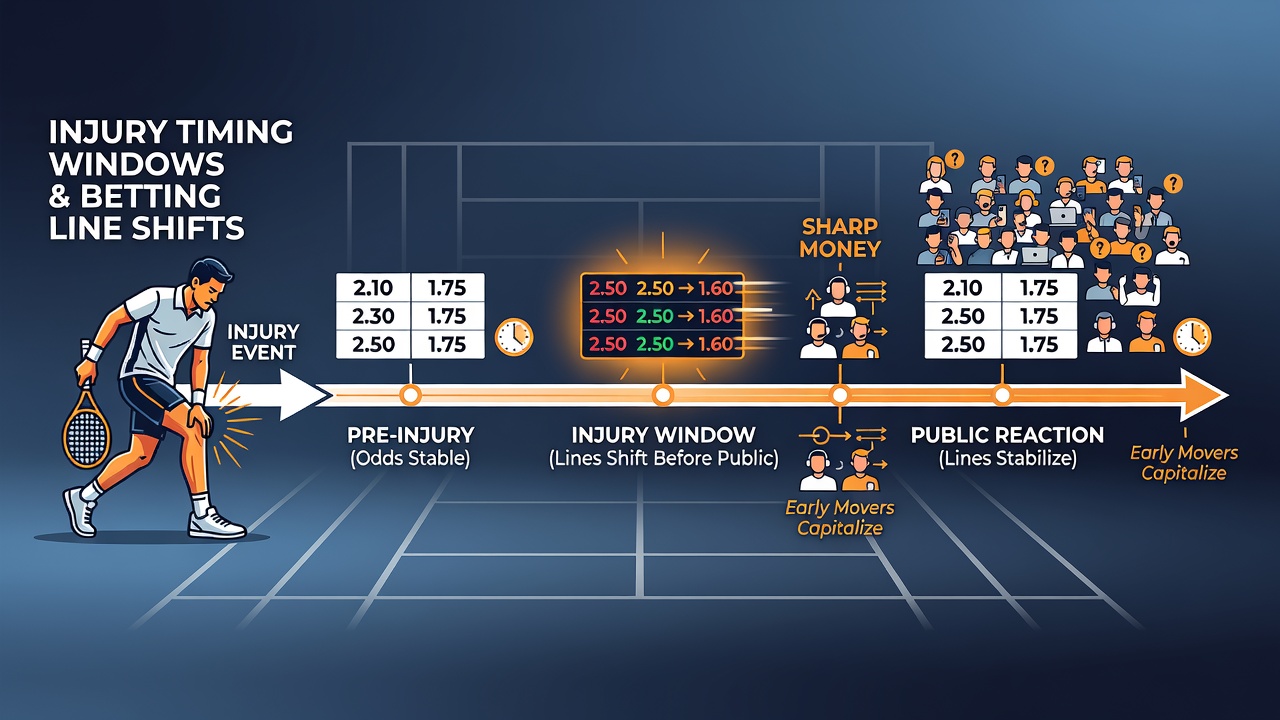
Studies of ATP and WTA matches reveal that certain injury types follow predictable timing sequences. Lower-body issues surface during initial warm-up routines, while upper-body complaints tend to appear after the first set concludes. Those who've tracked these patterns find that bookmakers with on-site data feeds update totals and spreads within five to fifteen minutes of the first observation, and this adjustment occurs well before most bettors access the same details.
August 2026 schedules place several high-profile tournaments in Europe and North America simultaneously, increasing the number of overlapping injury windows that operators must monitor. Figures from match tracking services show elevated line movement during these periods, particularly in matches involving players with recent medical histories.
Market Response Mechanisms
Betting platforms integrate multiple data streams, including court-side reports and player movement metrics, which allow rapid recalibration of odds. When a serve speed drops by more than eight percent between games, algorithms flag potential issues and push corresponding prop markets downward. This process operates continuously, yet the public receives only the final adjusted numbers without visibility into the intermediate steps.
One study released by an Australian sports performance institute documented how shoulder stiffness noted at 2:15 p.m. local time altered under/over lines for total games by 1.5 points before the 3:00 p.m. official start time. Bettors relying on mainstream news feeds encountered the updated prices without context for the shift.
Regional Regulatory Context and Data Sources
Information released by the Nevada Gaming Control Board outlines how licensed sportsbooks must maintain audit trails for line changes triggered by non-public information, and similar requirements appear in frameworks from the European Gaming Regulators Association. These rules do not prohibit rapid adjustments based on observable court activity, but they require documentation when timing windows produce statistically significant shifts.
Industry reports compiled by the International Betting Integrity Association further indicate that tennis accounts for a disproportionate share of rapid line movements compared with other individual sports. The data highlights serve percentage declines and medical timeout frequency as leading indicators that precede public announcements by measurable intervals.
Player-Specific Injury Histories
Longitudinal records demonstrate that certain athletes exhibit recurring injury patterns tied to specific match phases. Those who've examined five-year datasets note that players with prior knee procedures often signal discomfort during extended baseline rallies, creating windows where total games markets contract before general awareness spreads. The timing of these signals varies by surface, with clay events showing slightly longer intervals between observation and line adjustment.
August schedules in 2026 include multiple hard-court events where recovery windows between matches shorten, raising the likelihood that minor issues compound into visible performance drops. Tracking services record these sequences through ball-tracking and heart-rate data, which feed directly into pricing models used by major operators.
Conclusion
Evidence from multiple circuits confirms that injury timing windows exist as measurable intervals during which betting lines adjust ahead of widespread public information. Data from regulatory bodies and performance studies shows these movements occur consistently across tournament levels, driven by on-site observations and algorithmic processing. Observers tracking these patterns continue to document how early signals translate into market recalibrations that later become visible to the broader betting audience.