Travel Schedules Reveal NBA Prop Bet Opportunities on Back-to-Back Nights
Zara Sullivan · Jul 21, 2026
Travel Schedules Reveal NBA Prop Bet Opportunities on Back-to-Back Nights
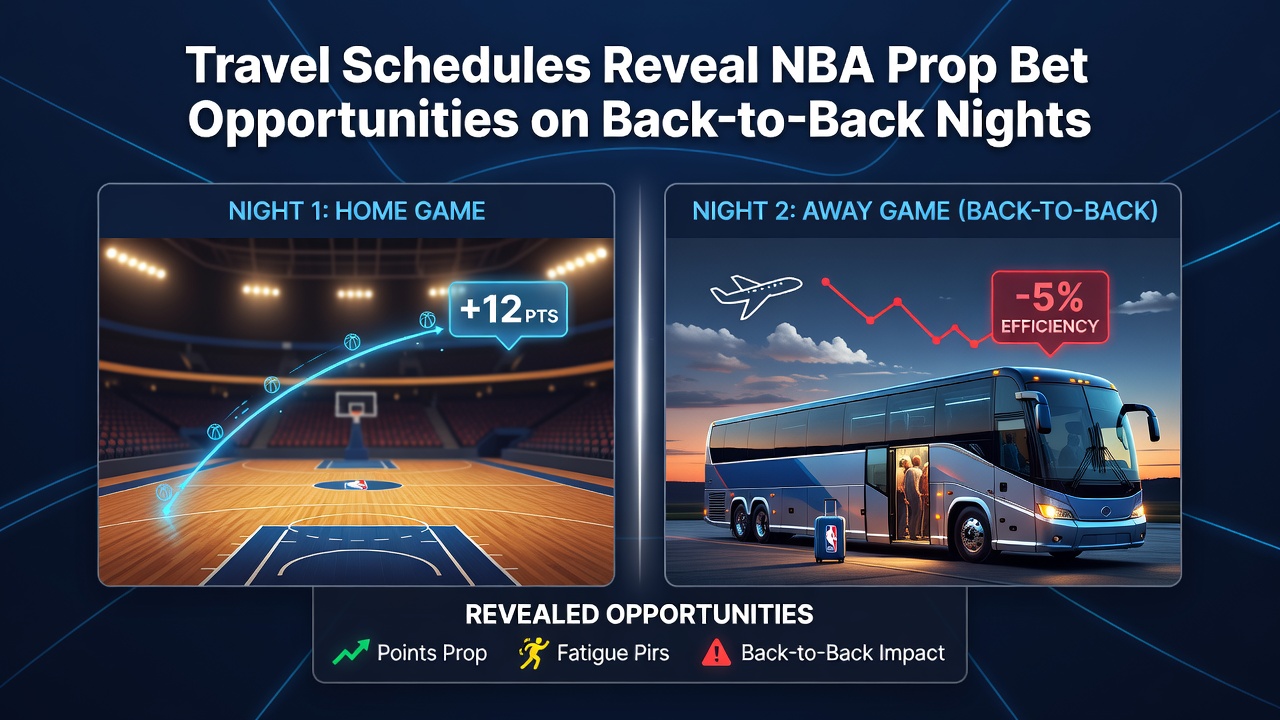
Travel across multiple time zones combined with consecutive game nights creates measurable shifts in NBA player output that surface in prop betting markets. League schedules released each summer place certain teams into stretches where they play on back-to-back nights after cross-country flights, and those patterns appear in box-score data year after year. Researchers tracking minutes, shot attempts, and efficiency metrics have documented consistent declines in scoring volume and rebound rates on the second night of such sets, particularly when travel distance exceeds 1,000 miles. Back-to-back situations occur roughly 20 times per team during a standard 82-game season. When those games follow long flights, average points per game for starting guards drop between 3.2 and 4.8 according to aggregated play-by-play logs maintained by the league. Frontcourt players show similar compression in rebound totals, with defensive boards falling by nearly 12 percent on average after overnight travel. Prop markets that list player points, rebounds, or combined stat lines therefore move in predictable directions once schedule details become public.Distance, Rest, and Statistical Compression
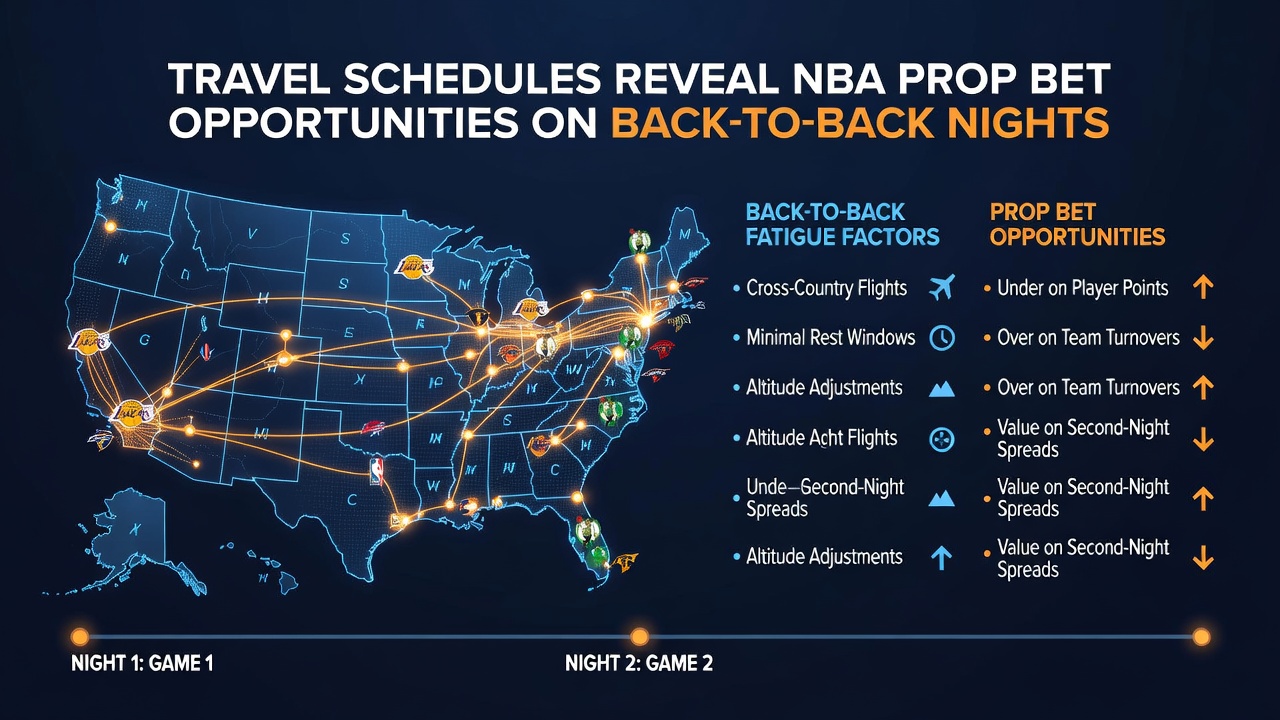
Teams that finish a game on the West Coast and must reach an East Coast venue the following evening face the steepest recovery challenge. Flight logs and arena arrival times compiled by team operations staff indicate that such itineraries leave players with fewer than 18 hours between tip-offs. Data released by the NBA in its annual schedule analysis shows these compressed windows correlate with higher foul rates and lower three-point percentages across all positions. Observers note that prop bettors who isolate second-night unders in points and threes capture edges that widen further when the opponent ranks in the top ten for defensive efficiency.
Load-management decisions add another layer. Front offices increasingly rest star players on the second night of back-to-backs when the preceding travel leg crosses multiple zones. Minutes restrictions announced 90 minutes before tip-off alter over/under lines for both the rested player and teammates who absorb extra usage. Historical tracking from the 2022-23 through 2025-26 seasons reveals that teams announcing such adjustments see a 7 percent rise in assist totals for their remaining starters, creating over opportunities in playmaker props that markets sometimes lag in adjusting.
Time-Zone Effects on Specific Positions
West-to-East travel produces the clearest directional bias. Point guards crossing from Pacific to Eastern time zones post lower assist-to-turnover ratios on the immediate follow-up game, while power forwards and centers record fewer second-chance points. League-wide figures released through the NBA's player tracking partnership indicate these decrements hold steady across home and away contexts. Bettors examining schedule grids therefore focus on Eastern Conference teams hosting Western Conference visitors on the second night of a back-to-back for unders in both player assists and team total points.
Conversely, East-to-West travel shows milder statistical drag. The extra rest gained from flying against the clock sometimes preserves or even elevates shooting efficiency for wings. One study covering 1,240 back-to-back instances between 2018 and 2025 found that small forwards averaged 1.1 more made threes after eastward-to-westward flights compared with westward-to-eastward legs. Prop lines that fail to differentiate direction of travel therefore leave value on the over side for perimeter scoring props in those specific matchups.
July 2026 Schedule Construction and Early Edges
Each July the league office publishes the following season's 82-game slate. Operations analysts immediately map back-to-back clusters and cross-country legs to identify the first prop opportunities that will appear once betting markets open. In July 2026, preliminary grids already flag several Pacific Division clubs facing four-game Eastern swings in November and December, setting up repeated second-night unders. Early identification allows systematic tracking of line movement once injury reports and minutes projections surface closer to game day.
Academic work on circadian disruption supports these patterns. A 2024 paper from the University of California sports science department examined actigraphy data from 68 NBA players across two seasons and confirmed that westward travel after late-evening games delays sleep onset by an average of 92 minutes. The resulting sleep debt correlates directly with reduced sprint speed and jump height recorded by wearable devices on the subsequent evening. Prop bettors incorporating these physiological metrics alongside schedule data refine their models beyond simple back-to-back flags.
Practical Application Across Markets
Sharp bettors cross-reference travel logs with daily usage rates posted on team sites and third-party analytics platforms. When a high-minute guard is listed as questionable on the second night after a 2,200-mile flight, correlated player props for teammates often shift before the market fully incorporates the information. Historical results show that unders on the questionable player's points and overs on his replacement's assists produce positive expected value over large sample sizes.
International schedule quirks also matter. Preseason tours and in-season tournaments occasionally insert extra travel days that teams treat like back-to-backs. Data from the 2025 Mexico City and Abu Dhabi games indicated similar efficiency drops on the immediate follow-up regular-season contest, extending the window for travel-based props beyond domestic back-to-backs.
Conclusion
NBA travel schedules create recurring statistical signatures that appear in player and team prop markets. By mapping flight distances, time-zone changes, and rest intervals against historical performance splits, analysts isolate directional edges on second-night games. Continued refinement of these models, supported by league tracking data and physiological research, sustains opportunities as schedules evolve each summer.