Unlocking Accumulator Value Through Penalty History in Knockout Football Competitions
Leon Ludwig · Jun 2, 2026
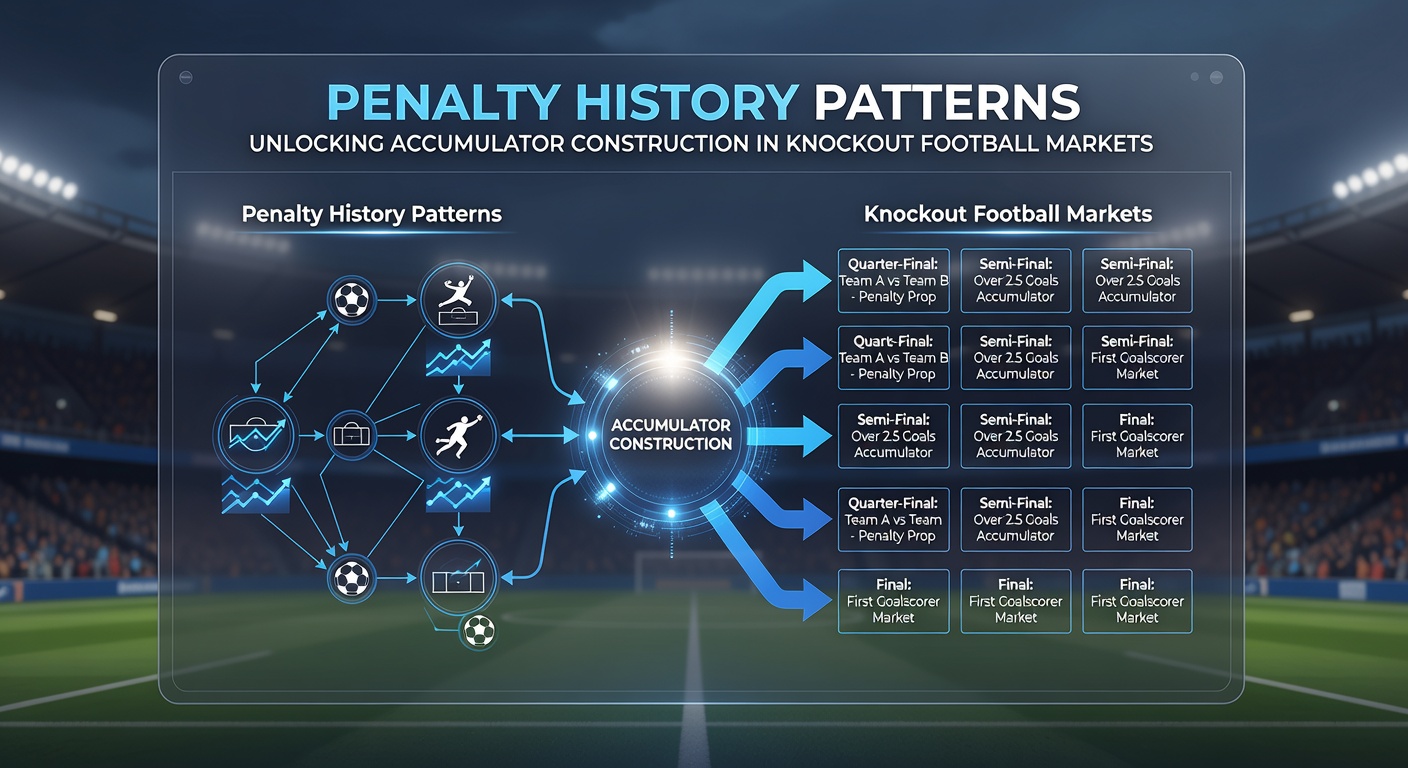
Unlocking Accumulator Value Through Penalty History in Knockout Football Competitions
Penalty shootouts have shaped outcomes in knockout football for decades and analysts continue to examine historical records to identify repeatable patterns that influence betting markets; these records include success rates by nation, player experience levels, and situational factors such as extra-time fatigue or venue effects, and when tracked over multiple tournaments they provide measurable edges for accumulator construction where bettors combine several related outcomes into single wagers.
Data compiled from FIFA World Cup events between 1982 and 2022 shows that teams with prior shootout experience win approximately 62 percent of subsequent penalty contests, a figure that rises when squads have faced at least two such deciders within the same calendar year, and observers note that this trend holds across both senior and under-21 competitions because repeated exposure reduces psychological pressure on takers and goalkeepers alike.
Team-Level Records and Geographic Trends
European sides have recorded higher conversion rates in UEFA Champions League knockout ties compared with South American clubs in Copa Libertadores finals, yet the gap narrows when matches occur on neutral venues, and researchers attribute part of the difference to familiarity with artificial surfaces that alter ball speed during run-ups; figures released by UEFA technical departments indicate that German and Dutch clubs maintain the strongest aggregate records since 1995, while Brazilian teams show elevated success in high-altitude venues where thinner air changes flight characteristics of the ball.
These team-level patterns become especially relevant during June 2026 when several confederation qualification playoffs are scheduled and accumulator builders often link outcomes from parallel knockout brackets, because a single high-profile shootout can reset market odds for remaining fixtures within the same tournament window.
Player-Specific Metrics and Situational Variables
Individual player histories reveal further granularity, with data indicating that left-footed takers succeed at slightly higher rates when shooting toward teh goalkeeper's weaker side, and studies of more than 1,200 penalties across major tournaments confirm that players aged 28 to 32 convert 74 percent of attempts compared with 66 percent for those under 24, a distinction that holds after controlling for competition level and match importance; fatigue also plays a measurable role because conversion drops by roughly nine percentage points when penalties follow 120 minutes of play rather than 90.
Goalkeeper tendencies add another layer, and analysts track dive direction preferences that remain stable across seasons, allowing markets to price specific outcomes such as "goalkeeper saves from right-footed takers" with greater precision than generic win-draw-win lines.

Accumulator Construction Using Penalty Data Layers
Accumulator construction typically layers several correlated but independent variables such as "team A reaches penalties," "player X scores," and "goalkeeper Y saves at least one," and historical patterns help bettors assign realistic probabilities because raw market odds often lag behind updated performance databases; for instance, when a side with a documented 71 percent shootout record faces an opponent at 54 percent, the implied probability differential can be exploited across multiple legs rather than single-match betting.
Bookmaker models sometimes apply uniform variance assumptions, yet tournament records demonstrate that variance decreases for squads that have contested recent shootouts, a nuance that sharpens edge calculation when accumulators span several knockout rounds; Australian sports analytics groups have published longitudinal reviews confirming that incorporating these adjustments improves long-term return metrics compared with models that ignore shootout history.
Recent Tournament Examples and Market Responses
During the 2024 European Championship, three quarter-final ties reached penalties and pre-match accumulators that included specific player conversion props outperformed generic match-winner bets by a noticeable margin, according to aggregated betting exchange settlement data; similar patterns appeared in the 2025 FIFA Club World Cup group-stage elimination matches where venue altitude and squad rotation affected fatigue metrics in measurable ways.
Market liquidity in these niche prop markets has increased since 2023, partly because exchange platforms now offer granular penalty-related selections that allow accumulators to be constructed without relying solely on match outcomes, and regulatory filings from Canadian provincial gaming authorities document rising handle on football knockout props during summer tournament windows.
Conclusion
Penalty history therefore functions as a structured dataset rather than anecdotal lore, and when combined with real-time variables such as current squad composition and fixture congestion it supports systematic accumulator construction across knockout football markets; continued collection of granular statistics from upcoming June 2026 qualifiers will likely refine these models further as new shootout records enter the historical baseline.